In today’s fast-paced world, kitchen appliances are becoming essential, especially for Southeast Asian households that balance modern lifestyles with traditional cooking practices. From Malaysia to the Philippines, busy professionals, home cooks, and even students are now looking for appliances that simplify meal prep without compromising the rich and varied flavors that define the region’s cuisines.
But with so many options available on popular platforms like Shopee and Lazada, how do you know which appliances are worth your money? In this guide, we’ll explore several smart kitchen gadgets perfect for preparing Southeast Asian dishes, examining their pros and cons, comparing options, and giving you practical advice tailored to our unique needs and preferences.
The Relevance of Smart Kitchen Appliances in Southeast Asia
Southeast Asia is a melting pot of diverse culinary cultures, from Malaysia’s spicy sambal to Thailand’s aromatic curries, and the grilling traditions of Indonesia. These meals often require specific cooking methods like stir-frying, steaming, slow cooking, and even fermenting. Modern appliances help streamline these processes, saving time while delivering authentic results.
As more Southeast Asians live in urban environments with limited space, energy efficiency and compact designs have become more important than ever. Whether you’re a working parent, a college student living in a small apartment, or someone who simply loves food, smart kitchen gadgets can make life easier without sacrificing the joy of preparing delicious local meals.
1. Air Fryers: A Healthier Way to Enjoy Fried Favorites
Product: Philips Premium Airfryer XXL (HD9650/91)
Air fryers have been gaining popularity in Malaysia and other SEA countries due to their ability to “fry” food with minimal oil. For those who love crispy fried dishes like ayam goreng (fried chicken), goreng pisang (banana fritters), or even tempura, air fryers offer a healthier alternative without sacrificing the crunch.
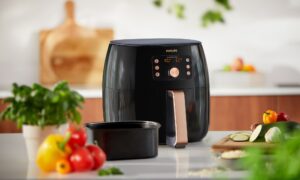
Key Features:
- Rapid Air technology: Fries food with up to 90% less fat.
- Extra-large capacity: Perfect for family-sized meals or batch cooking.
- Digital display with preset cooking modes: Includes settings for fish, meat, frozen fries, and even baking.
- Keep warm function: Keeps food warm for 30 minutes after cooking.
Comparison with Similar Models:
Compared to models like the Xiaomi Mi Smart Air Fryer, the Philips XXL offers a larger capacity and more cooking modes, making it ideal for larger families or gatherings. However, it is priced higher, which may be a factor to consider if you’re on a budget.
Pros:
- Quick cooking time.
- Easy to clean with dishwasher-safe parts.
- Versatile cooking: from frying to grilling and even baking.
Cons:
- Bulkier than some air fryer models, requiring more counter space.
- Higher price point (around RM1,200 on Lazada or Shopee).
Practical Tip:
If you often cook in larger quantities, the Philips Airfryer XXL is a good investment. However, if you live alone or in a smaller household, consider opting for a smaller model like the Tefal Easy Fry Classic, which has a more compact design but offers similar functionality.
2. Rice Cookers: More Than Just Rice
Product: Tefal Fuzzy Logic Rice Cooker (RK7321)
In Southeast Asia, rice is a staple, but rice cookers today can do so much more than cook rice. The Tefal Fuzzy Logic Rice Cooker, for instance, is perfect for preparing local favorites like nasi lemak, congee, and even slow-cooked soups.

Key Features:
- Fuzzy Logic technology: Automatically adjusts temperature and cooking time for optimal results.
- 10 cooking programs: Includes options for porridge, steaming, and soup.
- Large 5-liter capacity: Ideal for families.
- Delay start and keep warm function: Perfect for meal planning and busy days.
Comparison with Similar Models:
Compared to the Panasonic 5-Cup Microcomputer Rice Cooker, the Tefal model offers more diverse cooking options, including a specific porridge setting, which is highly useful for Southeast Asian dishes. The Panasonic cooker, however, is known for its superior rice texture due to its advanced heat distribution technology.
Pros:
- Versatile functions go beyond rice.
- User-friendly digital interface.
- Large capacity is great for family meals or dinner parties.
Cons:
- Larger size means more counter space.
- Takes slightly longer to cook rice compared to basic models.
Practical Tip:
If you cook multiple types of dishes with your rice cooker, the Tefal model is perfect for you. On the other hand, if rice is your main focus and you want perfectly cooked grains every time, the Panasonic model may be a better fit.
3. Multi-Cookers: The All-in-One Kitchen Hero
Product: Instant Pot Duo 7-in-1 Electric Pressure Cooker
Multi-cookers are quickly becoming essential in Malaysian and Southeast Asian households, where families enjoy a mix of slow-cooked, stir-fried, and pressure-cooked dishes. With one appliance, you can whip up rendang, steam fish, sauté sambal, or even bake a cake!
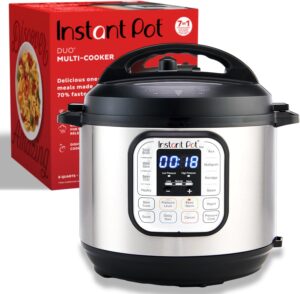
Key Features:
- 7 functions: Replaces multiple appliances with pressure cooking, slow cooking, sautéing, steaming, warming, rice cooking, and even yogurt making.
- Stainless steel inner pot: Durable and easy to clean.
- Multiple safety features: Offers peace of mind, especially with high-pressure cooking.
Comparison with Similar Models:
Compared to models like the Tefal All-In-One Cooker, the Instant Pot Duo excels with its ease of use and international reputation for reliability. However, the Tefal cooker offers slightly more localized cooking modes (like a dedicated stew function for rendang) and comes at a slightly lower price point.
Pros:
- Versatile and highly efficient.
- Saves space and money by combining multiple functions.
- Perfect for preparing traditional slow-cooked dishes quickly.
Cons:
- Steeper learning curve for new users.
- Higher initial investment (approx. RM500 to RM600).
Practical Tip:
For those who enjoy experimenting with various cooking methods but have limited kitchen space, the Instant Pot is a smart buy. If you’re on a tighter budget, consider a basic electric pressure cooker like the Midea MY-SS6062, which offers fewer functions but at a more affordable price.
4. Blenders: Smoothies, Sambals, and More
Product: Panasonic MX-V310 Blender
Blenders are not just for smoothies in Southeast Asian kitchens; they’re also used for grinding spices, making sambal belacan, or even creating curry pastes. The Panasonic MX-V310 is designed to handle tougher tasks, thanks to its durable blades and powerful motor.
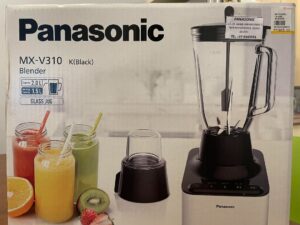
Key Features:
- Powerful 600W motor: Suitable for both wet and dry ingredients.
- 2-speed settings with pulse: Allows for better control over the blending process.
- Safety lock system: Ensures the blender doesn’t start until properly secured.
Comparison with Similar Models:
When compared to the Philips HR2221 Blender, the Panasonic model offers a more powerful motor and better durability for tougher jobs. However, the Philips model includes multiple pre-set modes, such as one for crushing ice, which could be a useful feature if you regularly make cold drinks.
Pros:
- Excellent for multi-use, including grinding spices.
- Durable design, built for heavy-duty use.
- Easy to clean with removable blades.
Cons:
- Not as many pre-set modes for convenience.
- Louder operation compared to other models.
Practical Tip:
If your main use of a blender involves heavy tasks like making sambal or curry paste, the Panasonic MX-V310 is an excellent choice. For more diverse everyday use, like smoothies or cold drinks, the Philips HR2221 might offer more value with its pre-set modes.
Conclusion: Choosing the Right Appliance for Your Kitchen
When it comes to choosing the best kitchen appliance for Southeast Asian cuisine, it’s essential to think about your lifestyle, the types of dishes you regularly prepare, and the space in your kitchen. Appliances like air fryers and rice cookers are excellent for families, while multi-cookers can save time and space for busy professionals or those living in smaller apartments.
Ultimately, no matter which appliance you choose, always consider:
- Size: Does it fit your kitchen space?
- Functionality: Will you use all the features it offers?
- Price: Does it fit within your budget, and is it worth the investment for your cooking needs?
Have you tried any of these kitchen gadgets? Do you have any recommendations for other products? Share your thoughts and experiences in the comments below—we’d love to hear from you!